
“Look. Do yself a favour. You must be getting well tired of talking to your girlfriend all the time, right? If you’ve got a wife you’re in even more trouble. Do something interesting for a change. Have something to talk about with your friends. The Tim Pope Video Show! …I’ve done my bit. I’ve got my money. I’m off out.”
October 1988 Interview to promote “Spirit of Eden” with Richard Skinner, BBC1
RS – Richard Skinner
MH – Mark Hollis
The tape cuts in here with Richard Skinner “….to Mark Hollis the lead singer of Talk Talk” …
RS: “Our guest today is Mark Hollis of Talk Talk, and I guess first of all we have to say, the new album has been a long time coming”.
MH: “Sure”.
RS: “Exactly how long did it take to record?”
MH: “About 14 months I think something like that. Just really because of the principle of recording it which there were sort of two main ethics with this album. One was sort of to still work in terms of this sort of, you know, Gil Evans approach to construction but the other thing was that the most important aspect of this record should be its attitude. And you know, music at its best I think is music when it first emerges and music when it is at its most spontaneous. So why it took so long was because apart from like a basic guideline to this record virtually everything that is played within it is actually spontaneously played and then later assembled, so that it meant for example you know, you might be working with someone say for ten hours and get sort of ten seconds of music from them. But it was the only approach I could see that would actually give us an end result of this type.”
RS: “it actually opens with a trumpet note which is perhaps reminiscent of Miles Davis (at the same time MH: “Miles Davis”), which is a …”
MH: “Miles Davis, absolutely, yeah, definitely.”
RS: “Is this one of many references that we could find if we were to reflect?”
MH: “Yeah I would say it is, I would definitely say that. I mean there are a lot of references within this album to different things. And sure, that “Sketches of Spain” is definitely one important thing.
RS:“ You’ve described your music actually as a reaction against what’s going on in other people’s music at the moment. What is wrong, do you think, with other people’s music today?.”
MH: “Well I, all it is, as a generalisation, I think the trend is far too much towards singles, and far too much towards the sort of technicality of music, rather than the actual spirit of music, you know, like I say, the most important thing of this album above everything to me, is just that is has feeling within it. It’s sort of like you know, maybe like say the first thing that I ever learned when I started making records was that if you went in and you made a demo of a song it would inevitably be better than the finished recording regardless of the cost. So, all this album really is about, is just trying to catch these moments from people as they first emerge, rather than them being sort of dictated parts.”
RS: “It must have been a nightmare having to assemble it afterwards then.”
MH: “Yeah. Well, I mean, the assembling just went you know, as you were working each day, but at times it was a nightmare listening to, you know, vast amounts of someone playing and then sort of giving it the red button, you know. Yeah”
RS: ”Yes, because judgements can change. The perfect take for today, can be the one that you’d throw away tomorrow, sometimes.”
MH: “Well I mean you see, in terms of the take, you see, the only way that a sort of take situation occurred, was just in the very basic laying down of the track where sort of like, you know, maybe three of us would just put the basis down. From that point onward, you know, there is no take. You see, this is the one reason why I don’t think an album, the way this is made, could have existed in an earlier time, because it is only because of the advent of this sort of digital recording technology, that you can get away with the way this album has been constructed, which is just that thing of giving people absolute freedom, being able to take the smallest amount of what they play, but not even necessarily using it where they did play it, you know, putting it elsewhere in the album and then you know, being able to make this very careful construction of arrangement but absolutely everything that is played is fresh and from that person.
You know, it’s sort of like, with this album, I think, what Talk Talk is on this album really, is like a kind of co-operative of musicians, and with the exception of maybe say like four people on this album who have dictated parts, everyone who played on this album, it is as much their album as it is anybody else’s album, because it has come from them, not from, you know, not from me.”RS: “Yeah, we’re talking some 16 musicians, plus the choir of Chelmsford Cathedral.”
MH:” Yes right, but I mean, you know, we had, I mean we must have had like easily 50 musicians in that tried for a place on this album. But you know, it’s really not a question of technique, this is the really important thing about the attitude of this album, it is just purely like a question of understanding the feel of this album, not a thing of technique at all. I really do think you could have a 5 year old child could easily have got on this album, providing, you know, he understood it. This album, you know, is just purely, I really think for people listening to this album, they will understand it or they won’t understand it. There is no way I can convince anyone to like this album. I don’t wish to. I just think you know, you either go with what it is about, or you will never know.”
RS: “In America, they tend to group you in this awful tag of New Age, or ambient music. What’s your thought on that?”
MH: ”Right, right”. “The thing of like ambient music, I don’t know what it is, but in terms of its definition, I mean, ambience is something that I love very much. The whole way that, you know, that this album has been recorded, is with a regard to natural ambience that’s sort of virtually everything would be miked at the distance to allow you the amount of echo you want rather than adding it you know, from a desk. So that sort of organic thing is a very important aspect of what this album is.”
RS: “We’re talking to Mark Hollis of the band. Who plays the blues harp?”
MH: “Oh, Mark Feltham. Mark Feltham, the same person that played on our last album. A great player. You know, again, there are so few people that I come across with who really absolutely have a feeling for music and he really does, you know.”
RS: ”There’s a real sort of contradiction in sound between that church piano, the organ sounds, and then there’s the harp, and the guitar, the heavy guitar. You trying to shock us here?”
MH: “Sure”. “Well, I just think, you know, I’ve always liked the idea that things that oppose each other can co-exist, that’s all it is”.
RS: “Um, it’ll shock your listeners. Do you know who your listeners are? Do you have an idea?”
MH: “No I don’t. I would think you know, there is a core of people who have stayed with us throughout our career, if you like. And I would think you know, because of the way our albums change, other people have sort of come and gone.”
RS: “Yeah changed dramatically too, over the 6 years.
MH: “Yeah, I would think so. Yeah. I mean I just think that is the most important aspect to making a record, I think unless it actually shows some form of development or change, I cannot understand the reason for making a record otherwise.”
RS: “Mm, so why did you choose the Eden concept? What is the “Spirit of Eden”? What was that about?”
MH: “Well all “Spirit of Eden” means to me, is it means two things within that same title. It means what is created and then, what has been destroyed. That’s all it means. Again it is this thing of two opposites co-existing. That’s why I like the title”.
RS: “Is it then an allegory, the whole thing, perhaps for our times? I don’t want to get too serious about it.”
MH: ”Yeah”. “Maybe it is yeah, maybe. Yeah, I mean lyrics and things aren’t something I sort of really like to talk about, you know. These aren’t sort of you know. These do mean a lot to me these lyrics and I don’t think they are sort of too inaccessible as long as you spend a lot of time with them, you know, I think if you do actually spend enough time with them, they will become very apparent as to what they mean. But, I just sort of think, in the same way with the musical side of the album, it’s something that should unfold itself over a period of time. I think the same should be true with the lyrics, so I’d be loathe to …”RS: “Alright, rather than talk about the lyrics then, what do you think about the way we are nowadays. I mean modern society we seem to be grabbing more and more, while at the same time, losing more basic values perhaps.”
MH: “Yes” “Yeah. Yeah. Maybe. Maybe. I mean my biggest worry is just sort of where communities become lost, that’s my biggest worry.”
RS: “You mean in inner cities, or in countries, or what?”
MH: “I just mean you know, as people sort of get more insular from each other, that’s my biggest worry. You know, and also, in terms of things like the radio and in things of like television, to a large extent there’s a tendency to treat them as a background noise and just let them go on regardless of whether there’s something that you actually pay attention to. I think silence is an extremely important thing, and I think you know, it isn’t something that should be abused, and that’s my biggest worry, is because of with the whole sort of way communications have developed and everything that there is a tendency just to sort of, allow this, allow this sort of, you know, this background noise all the time rather than actually just thinking about what is important.”
RS: “That’s fair. Very fair. I’ve been listening to it, on a CD, this album. It seems to me that you’ve actually made it with the compact disc in mind.”
MH: “Right.” “Yeah, absolutely. Absolutely. I mean this album does… You know, I would never make something for, you know, I would never sort of put more tracks on a compact disc than I would on an album, because I hate the idea that what you’re doing is you’re sort of working to like an elitist market and you’re saying you know because you can afford a compact disc player then I will give you more of our repertoire than if you can’t. But, the, you know, this is made with absolute extremes of dynamic and it is just a fact that the compact disc can handle that better than an album can, or a tape can.”
RS: “The dynamic range is very wide, I turned it on, pretty loud, I didn’t realise, didn’t know the opening section with the wildlife noises, the music came and I was nearly out the door. It blasted me out. Did you use any special recording techniques to ensure the high quality of the sound. I mean digital you’ve mentioned already.”
MH: “Yeah that’s right. Sure, yeah sure. Yeah, that’s right.” “Yeah sure, and like I say, the other thing is just with using ambience and the fact that you know, to me you see it’s that technically the sounds aren’t important, what is important is just the actual feeling in the sound. So the sound doesn’t have to be this enormous thing, it is just the feeling that’s important. And then, it was just a question of working with an engineer who actually had a really good understanding of recording. I mean you know, the bloke that we’ve used on this album, Phill Brown, I mean where his career actually dates from is like Electric Ladyland, you know, we’ve had someone who’s been sort of like you know in engineering twenty years now. So, he’s worked with such an array of things, has such a good understanding, you know that was an important, an important aspect when we went in to make this album.”
RS: “So once again, it’s all very natural. You’re not getting into a contrived deal you know.”
MH: “Absolutely, absolutely. You see the most important thing to know at the point when went in to make this album was just the attitude that the album should have. That what the album would end up sounding like, there was no way of knowing that. But it was an important thing because as long as everything was recorded with the correct feel you could never go wrong.”RS: ”Thinking of the music for a second, there are a series of these slow build ups, using drums and bass and guitar. You always sort of leave tension though, don’t you, as it happens. And then it sort of resolves and disappears. Now was this a deliberate idea that you decided to repeat through the album, or did it happen by accident.”
MH: “Yeah sure, sure.” “Yeah”. “Yeah absolutely.” “Well I mean all of this thing, it’s like the construction of this first side, it’s like you know, there are so many sort of areas of music that you know, not only myself but Friese-Green like, that work in a longer format than just sort of like 5 minutes. I mean so much of that sort of Impressionist period of music, I think is very important upon the way that this album works. And that was why it was important to make this first side over that length so that, you know, the dynamic could be something that was arrived at very leisurely and very carefully, and the moments of silence could sort of really, you know, spill out.”
RS: “Mark, you’ve used all real instruments on this album. In the past I know you’ve used computer enhanced type instruments, synthesisers, why the change?”
MH: ”Yeah, absolutely”. “Sure, sure”. “Well, in the past that was just purely a thing of economic necessity. I mean at the time of “It’s my Life”, you know, the textural approach to the album was still there, but it was just purely an economic thing. There was no way we could afford to do it any other way. I mean, with this album, you know, like I say, it’s sort of you know. It’s what we find ourselves being able to do now.”
RS: “And it wasn’t cheap”.
MH: ”No, no. No, I think it cost more than thirty quid. Yeah.”
RS: “I think it did too! Who would you say are your musical heroes? Maybe ones who are, in a sense, represented in this work.”
MH: “Well my three main areas of music that I’d think are most important to this you know, I would say is definitely that late 50’s early 60s Jazz scene, the early 50’s Blues scene and then the turn of the century Impressionist stuff. I would say absolutely that would cover the main elements of this album.”
RS: “Been listening to the words, or trying to listen to the words. You seem when the band is really kind of going hell for leather you almost lose the record. Almost.”
MH: “Yeah, sure, sure. Well I mean you know, they should just be a part of you know, the sort of scenario as much everything else. I don’t sort of think of writing these things that everything is subservient to a vocal. I think you know, in order to, well certainly in terms of the way we’ve wanted this album to sound, it’s really important the positioning of where this vocal sits and the minute it becomes too loud it just assumes you know an overriding importance that is shouldn’t take.”
RS:”I think one thing that happens with the way you’ve mixed the vocals, they almost add to the dark side to the album, you know, that sort of mood.”
MH: ”Yeah, Sure, sure. Yeah, yeah, I would say that.”
RS: “Does the way the music has been mixed, in terms of having these violent contrasts in style and volume, is this all part of the message do you think?”
MH: “Right. Sure.” “Well I just think it’s part of the way a record should be put together, that’s all I think it is, you know.”
RS: “That’s a very simple answer to a complicated question! Here’s ‘Inheritance.’”
MH: “Yes, mainly ‘cos I didn’t understand the question.”
Nick Cave / Mark Hollis 2021
One is finally speaking without restraint, the other is definitely silent. As the Aussie crooner embarks on a tour of meeting and chatting with his fans, the visionary Talk Talk frontman, evaporated for twenty years, has left this world for good.
The recent announcement of a European tour (which unfortunately does not go through France) by Nick Cave in “talk” mode, where the Australian, alone on stage, would engage in the game of questions and answers with the public, was greeted by a number of grunts about the rather prohibitive price of seats. Certainly, the case, with its device at a lower cost, offered at a grand concert rate, is very beneficial to the interested party. It’s not Al Pacino who will say otherwise. But when you love, you don’t count, do you? Especially since, in the case of Cave, there is something really new about the proposal, quite exceptional even. Because this time it is a real exchange, without a net, between the public and him. Without taboos, he assures us. Which is already quite extraordinary, even more so from the brooding crooner. At least until recently.
Nick Cave, devious artist, as somber and restless as the spasmodic rock of his early recordings, was for a long time, for journalists, the least convenient of customers. Blame it on his extreme and assertive drug addiction, coupled with a frenzied refusal to deliver his emotions other than in his epic songs, with often encrypted images. Even calm, he still said to me a few years ago: “At Bad Seeds, empathy is not the first quality. We’re just a bunch of guys who get together to work together. Everything else, the worries, the heartache or even the overdoses, is in our free time. A ruthless boy club, in short. Until one day tragedy befell this hard worker, as hard on himself as on others.
On July 14, 2015, Cave’s world and certainties collapsed. Arthur, one of her twins, under the influence of LSD, fell off a cliff to instant death. The Australian, for whom the sky or the horizon seemed to have no limit on Push the sky away, a prodigious 2013 album, had to change. To share his pain and his pain, finally. He, who rocked dangerously on stage in a messianic boasting number à la Bono while touching the hands of his disciples during scheduled crowd baths, suddenly found in this carnal contact a comfort, a warmth, which he once seemed to mock. The tour that accompanied Skeleton Tree, shattering work of mourning, revealed a transformed singer, now feeding, disdain evaporated, greedily, on the love of his fans. In an interview at his home in Brighton in May 2017, I discovered a troubled man, more fragile and, above all, more attentive. In the grip of doubt for the first time. The preacher had turned into a real interlocutor.
He went further. In the wake of a meeting tour with his audience in Australia last year, he started a dialogue last November on his site The Red Hand Files (www.theredhandfiles.com), where he strives to respond with sincerity in the questions asked. An exercise in which he deploys a rare frankness, depth and humor. And that the man, long stingy with confessions, who recorded for more than thirty years on the Mute label (“silent”), should manifest just as fully during his next public performances. As he speaks, 61-year-old Nick Cave progresses, finds the strength and inspiration to keep creating.
Talk Talk. It was the name of the group of Mark Hollis, who was very silent before the Lord. An immense artist who passed away last Monday, at 64 years old. Twenty years after having sunk into silence, stopping the music in 1998, after his splendid and unique solo album. What killed him? Mystery … But we can say to ourselves that he was happy to have taken the tangent, to live peacefully with wife and children, how can we not believe that he did not succumb to wounds that had never healed? My memory of Hollis, beyond his precious records, is disturbing. Because he’s not the happiest. It was at the time of the Children of Rock, and of Rockline, with Bernard Lenoir, in the spring of 1986. To welcome the release of the exciting Color of Spring, an album which already announced the deep stylistic break to come from the group after the cumbersome popular triumph of It’s my life, we received the trio at the Le Martial club, rue Fontaine, in Paris, to film them playing Life’s what you make it and Living in another world. In playback.
Mark Hollis, the awesome Talk Talk singer, is dead
Disappearance
Frédéric Péguillan
The shoot, with its multiple takes, dragged on, especially as the musicians clamored for beer for beer throughout the session, with the corpses of cans numbering in the dozens. It wasn’t the first time that we had dealt with a group of rowdy thirsty people (if only our Cure chouhous). Except that they, Mark Hollis, haggard and not very helpful, at the head, reached heights of ill will in their behavior turning to sabotage. This provoked the exasperation of the technicians and consequently the tension of Lenoir. The show was hell to wrap up and then edit, and the memory of Talk Talk, from a human perspective, far from imperishable.
It’s hard to imagine back then that those who suffered the most that day were them. The leader in particular, we understood later, already plagued by his (understandable) allergy to the laws and rules of the promotion. Talk Talk wanted only one thing: to flee the futile world of pop with which it was associated in order to flourish in total artistic freedom. What Hollis will accomplish beyond all expectations with the following discs, freed from any commercial imperative, opening an infinite field of exploration to progressive pop, between folk, jazz, classical and ambient of a sensitivity and a richness supreme. When Spirit of Eden appeared in 1988, without an obvious single, to the chagrin of the record company but also of many critics who considered the work pretentious (especially across the Channel), Hollis let go, bitter: “At the beginning of the 70s, a time when innovation was celebrated, such an album would have been received carefree. But in the face of the mercantile crap that is coming out today … “
The man who values silence, including in his music, at the expense of unnecessary noises and notes, will eventually surrender. Disgusted for good? Will we ever know? An “illness” would have taken him. Let us salute the immense and upright artist who had the courage to leave a world he hated, against which he found it impossible to fight. And let us regret, by listening to it more and better than before, that we could not or knew how to support it more.
Roundtable on Radio One, 1982.
RIchard Skinner: This is a new band now called Talk Talk. They come from London and this is Mirror Man.
(Mirror Man plays)
RS: If you’ve just joined us, this is Roundtable with Richard Skinner here, Kid Jensen as well, Robert Palmer and from Japan, David Sylvian.
The music there provided by Talk Talk, it’s called Mirror Man.
I’ll turn to you first Kid, coz I know that this is something that you’ve been involved in a sense, hasn’t it, the band.
KJ: Yes, I’m rather pleased that they made their Radio One debut on my show with a session, several weeks ago, it was amazing because a couple of nights after that they announced that they had signed to EMI Records, because the following day there had been all the major companies onto them they were so impressed, and up to that point they’d only done about 5 gigs! It sounded like some strange hype. I got more letters about the Talk Talk session than any other session I’ve ever broadcast, and I thought, this really is major hype at work here but then they toured with Duran Duran, and again I got a lot of response from people who had gone to see Duran Duran, had seen the support act and were asking me to play more of Talk Talk.
Now, about this single, I don’t think this is one of their better songs, some of the numbers from our session were more obvious, but I think this will be successful for them because they have certainly a big following already.
RS: Mark Hollis, who writes the songs, also sings, says he wants to write songs to last a decade. Robert? You know, I assume they don’t last that long, but you know, still stand up in ten years.
RP: That’s very ambitious.
RS: Do you think he’s over reaching himself here or what?
RP. Um well. As I say, I heard this last night and it didn’t make any impression on me at all, last night, and listening to it there, I know why – the mix is awful. It don’t think it’s bad but …
RS You’re straining to hear the words there aren’t you?
RP It wasn’t the lyrics. It sounds quiet and I bet if you turn it up really loud it’ll still sound quiet. The drummer’s really going for it, and there is no sensation of it. The part he’s playing is real strong. It’s probably good.
RS. David Sylvian, have you met this lot before? Are you aware of them?
DS. No, no.
RS First impressions then.
DS I quite like the song actually. I think, had it been produced differently, maybe a different arrangement, it could have been quite good. As it is, it doesn’t offend me. But you know. It should do maybe.
RS. I have to give mention to producer Colin Thurston here, who put the record together.
RP Is he on the phone?
RS I don’t think so, he probably will be in a minute!
I like the twiddly bits of violins, that’s what really got me.
KJ Maybe it’s coz the song was on their session, it was more immediate in our studio somehow.
RS. Because they just put it together, in what? 2 or 3 hours?
KJ Yeah.
RS Allright, I think they’ve got a big future anyway. Talk Talk.
WE FOUND MARK HOLLIS (BY GUILLAUME MAZEL). October 24, 2016
– There he was, curled up my sergeant, buried between two old rugs, it was I who found him!
– We always find someone lost in the souk of Fez, this is not great news, it is commonplace.
– But it’s Mark Hollis, Mohamed, it’s Mark Hollis, shouf Mohamed it’s Mark Hollis !!!!
– And who is Mark Hollis, a king, a rich man, the son of Muhammad?
– I don’t know, sergeant, but he said ‘I’m Mark Hollis’, and that seemed very important to me.
– He’s got a rat’s face, doesn’t he?
– Well he says he’s 62 and he’s English.
– Yeah, well, with a name like that, he’s not from our area, what worries me is that he has a pimply teenage face, 62 years old, I can’t believe it. Whatever a nearly transparent white guy with a woolen cap and mittens in the middle of the Moroccan market in August, that’s enough to keep us worried for a while, let’s take it to the Rabat police station.
The being between two rugs was indeed all of the shy teenager, shivering as if he had been stolen a kiss and only realized it a few years later, smooth and disheveled hair escaped from the red cap of coarse wool, he had an innate gift for hiding his chin in his neck and his neck in his back. A big black flannel jacket gave a semblance of volume to his body but in fact served as a ballast for the lack of flesh that turned him into air. Along the way he said nothing, his ear listening to the clarinets and tribal rhythms, and sometimes uttering almost sung moans, like ovarian pains, like heretic’s complaints at the stake. A brief smile lit her face like a scene from The Shining, a touch of violent madness that choked on a nervous twitch in the back of the neck. At no time did he resist the orders of oriental accents, knowing in any case no vocable of this North African dialect. He was well treated, drunk, ate, cleaned and emptied, and finally lay down in cell 34 of the Rabat police station, wearing ridiculous short pants the stripes of which seemed to extend the thickness of his shins, of an old shirt. orange where a Hindu elephant was trying to survive despite its extinct red color by gesturing with its eight arms. He had asked for butterflies, here is the pachyderm.
We then found a translator at random in the adjacent street, named Rêda Allali, well known to the local police for saying no to everything, even to the annual jackpot, a rebel of himself what, but a rebel “With studies” and impeccable English from the Czech point of view.
It was useless, Hollis said nothing, burying himself in his thick, doggy-style overcoat on the folding bed of his tiny cell, falling asleep in twisted dreams like seventies posters between Hendricks and Nepal.
Upstairs, in a small office, poorly painted but equipped with good air conditioning, the modernity of which made a cruel contrast with the Arab posters and rugs, the two amiable law enforcement officers reported on the facts. and gestures to their superior, a chubby little man whose only intelligence seemed to lie in wearing glasses and a dozen feathers placed on the desk around an empty inkwell, an abandoned witness to the former tenants.
– How is it written Marc Hauliss? Don’t tell me you haven’t Google searched yet, shit then, I’m surrounded by useless people at the end, if one day we are lucky enough to have a good big case of serial murder, what what will you do, follow the series on tv?
– We didn’t have time, and then the computers, there are only homicides that they have, and then you boss, we know that you like computers, you are there all day , Khaled says you’re there at night too, even without a light, like a pro.
– Yes well… well, let’s see who it is this Mar Kholisse, he had papers on him? – We found sheet music and copyright, Carambar wrappers with puzzles, Kleenex and stamps with the head of the Queen of England, but we don’t know which one.
– And, he was armed?
– A very small Opinel, of those with the colored handle, Farid kept it.
– Mohamed, you’re a scale.
– Calm down, at least I know he didn’t come by plane …
The two men stood there dazed and surprised.
– Logically, these days, taking a plane to the Arab states with a penknife is impossible even for Houdini, and then he probably comes from the south of France, where these porcini knives are made.
– By boat no, chief, impossible!
– And why ?
– Well, we crossed a stream on the way and he was nauseous.
– But he didn’t arrive with wax wings anyway
– Maybe he’s a superhero?
– You stupid Farid, but what are you stupid!
“Silence,” the chief muttered, opening his computer as one would open Ali-Baba’s cellar.
He patted a moment, moaning often, in the frantic search for the perfect spelling of the name. After half an hour without success …
– Chef, chef …
– What ?
– Well his name …
– What ?
– It’s copyright on paper.
– Couldn’t you say it earlier?
– Well I thought you wrote to your wife, you always complain when you write to her.
– That’s why I’m a chef and why you never will, Farid, the art of deduction, give me these papers.
M.A.R.K H.O.L.L.I.S
…
Wikipedia:
Mark David Hollis (born January 4, 1955, London) is a British songwriter, singer and musician best known for having first served as a singer and songwriter in the group Talk Talk in February 1982 (release of the single Mirror Man ) in October 1991 (release of the single New Grass) before embarking on a solo career with the release, in January 1998, of an album: Mark Hollis (Polydor). He and his group were part of the new wave or pop wave in their early days, before gradually moving away in favor of more refined music sometimes referred to as post-rock or experimental. No news in 2000, some accounts point to a possible interstellar abduction in early January while he was picking porcini mushrooms in the Haut-Tarn.
– The photo, chouf, the photo, it’s him, it’s him, but twenty years ago… He’s the same, he… He hasn’t aged !!!
– This is witchcraft, he must be let go, he must go, by Muhammad, it is not good, no, no.
– This is not witchcraft, let’s calm down, we have in front of us the living proof of the existence of UFOs, we have hit the jackpot… I mean, I have won the jackpot.
Rising up with a good footing, although his smallness leaves him lower than seated, he suddenly came alive, his eyes shining and, bringing his deer to pace, he made his way at full speed to the lower cells, the urge burning. to interview this bewildering Mark Hollis first, and to know the extent of the treasure.
Mark slept humming rather than snoring, choppy sounds like a shy, cold Jane Birkin, a wounded dog whose voice kills with fatigue. His sleep was rudely shaken by the creaking sound of the door opening, and then the reality was violent, in the harsh blow the incandescence of tungsten struck his retina.
– Dear, dear Mark, I can talk to you, eh, dear Mark? said the chef in English worthy of the best Portuguese translator. Well, first of all, express how sorry I am for the treatment my subordinates have given you, beg your pardon from them, and offer you some tea.
– I don’t like tea, I want milk.
He’s going to be boring this one, thought the little chef.
– Okay, okay, milk, I have some… routine… let’s say, questions for you, if you don’t mind.
– I slept there, there were butterflies everywhere, the weather was nice, it smelled of the countryside around Scarborough, there was a painted duck playing the trumpet. He’s gonna be really boring.
– Yes, sorry again, but the jet lag must have jostled you here, it’s a typical time for interrogation … questions. Speaking of jet lag, where are you from?
Mark twisted his neck and fixed his gaze on the bulb, offering a drunken Jack Nicholson look. Smiling he pointed to the light.
– From there …
A sigh, akin to the breath of a locomotive, came out of the chef’s mouth and created crevices in the walls. The nervous leader posed his portrait of twenty years ago in front of the old teenager. Hollis ran her fingers over the picture along her chin, a slight joy filling her face.
– Me, before them, is me.
– Before who?
– Do you really want to know?
– We will have to explain our salaries to the people.
– Farid and I are used to overtime.
– I wanted to retire from the scenes, tired, can be jaded by success, I wanted to stop, my head was playing jazz and my hands rocking, I was tearing myself, so I wanted to disappear, I went south from France, because the south had nothing to do with me. Strangely, I was picking up sounds from walls, fabrics, herbs, a curse and creating symphonies almost without realizing it, my head was exploding in solfeggio, my mouth froze in words, the south was not enough. So I wanted to disappear even more, but I didn’t have the strength to leave myself, I locked myself in my past, in my Renees and my colorful springs, autistic of me. I learned to shut up my life. One day, in a thick wood, while I was hallucinating on my mushrooms, a clear blue light landed on my shoulder, its sudden sting froze me in place, a golden light then came on my forehead, and my heaviness vanished. suddenly, and I floated to a 33 rpm record which flew over me, and merged me in one of its grooves. On a parallel furrow I saw other worn-out singers melt away, their faces exuded peace, their faces exuded fear. I slept in the hollow of a record for too many years, sometimes people came to take snatches of songs from my soul to try best-of from me, then from so many others, from an era, from a time, for any reason, for any party, my memory was ripped out. However, I remained lively, anxious to preserve my life beyond singing, anxious to one day become an ordinary human again. And then three days ago, I was composing an experimental title on the piano, screams were heard everywhere, my one hit wonder neighbors tore their ears, they came then, finally visible, staggering and as if drunk. – Who, who were they?
Silence followed.
– Chief !
– What Mohamed?
– Chief, he fell asleep …
– But what is this guy, a wreck, does he fall asleep when the story gets interesting, is he not that sahib?
– Maybe he’s sick, there are guys who unwittingly fall asleep, I saw a documentary on that.
– Yes, there are some who don’t realize they’re awake like you Farid.
They took the time to go to the toilet, stocking up on tea and Christian smother, as if a commercial break was it. When they returned to their seats, the film had already resumed.
They were both elongated and fat, tanned skinned and dressed in suits and gold, from their pockets emanated papers that begged for signatures and sold as autographs. They told me about their land, called Messinia, told me about sales and events in a language that weighed heavily on me. Their anger was blatant, my composition seemed to have weakened their weapons. When I understood this weakness, I discovered the possibility of an escape, I began to grind all that seemed to be music, without standards, without eras, without feelings, the chaos, the chaos, the impossible listening, the decadence of the ‘hearing. Their costumes cracked, their papers got wet, their heights sagged, their perpetrators escaped. It was when they were trying to kidnap Cheb Khaled in order to spruce up their coats of arms after my lack of success, that I took advantage of their disinterest and let myself fall like a vulgar subway singer in those soft carpets where you found me.
– What a story, eh?
– Is everything recorded Mohamed? We should not lose this opportunity to make ourselves rich, we are the first to have living proof of the existence of other lives.
– Think again !
– How, your story offers no doubt, and the fact that you have not aged is indisputable
– Here you may find it unreal, but on my side, it has nothing irrational or supernatural, with me, we call it marketing, economy or even, business, we do not get rich by showing them with your finger, today you have nothing more and nothing less than before. Go to bed, dream, sing in the shower, duck, squawk, run away from hits, and then let me sleep.
The next day, Farid went to feed Mark Hollis lunch, but the missing man, who was found, had passed out to a song.
DeeJay TV, Italy, 1984
TRANSLATION from ITALIAN
First guy from audience: “Look I expect to space out! It’s been a depressive week, but now I am here and… ‘fiieeww’!!”
First girl from audience: “I await a concert with a music that is different from what we are usually used to…”
Second girl from audience: “I already saw Talk Talk in Milano and they were wonderful. I expect they will be even better here today, with all these people…”
First interview – Mark: “Why do I close myself in the wardrobe after the concert? Well, it happened twice in my life and both the times there were TV troupes in my room. You see, when I come back to the hotel and I am alone, I can slip into my bed and sleep. But if I come back and I find TV people in my room, so I begin to look for a better place to be quiet and I found out this best place is my wardrobe!”
Mark (in italian) on stage when introducing “It’s my life” song: “This song is very important to me because its title is ‘It’s my life’!!”
Second interview – Paul: “I have to say this was the best concert we ever did.” Lee: “It is a fantastic audience.” Mark: “Well, what can I say? I had fun. There is not so much to add, really. It was great and I had fun. I like doing concerts.”
Third interview, probably on the bus to the concert (not so easy to distinguish who is saying what) – Paul: “Here we are guys! All together while we’re going to the concert!” Lee(or Mark?): “First scene, ciak one!”
Fourth interview, immediately after the third, minute 10:16 – Lee: “Before getting on the stage I think about how I am going to play, I prepare myself psychologically, I think about the beats of the different songs and similar things…” Mark (laughing): “Before getting on the stage I train drinking two bottles of Gin!” Paul: “I do not think about anything before a concert. I get on the stage and play, just that. It’s simple.”
Again second girl from audience: “[I loved]… when they sang ‘Dum dum girl’, that is my favourite song from them…”
Fifth interview, from minute 24:10, on the bus – Mark: “You know, there is this guy here (points the cameraman with finger) that is following me everywhere! I woke up this morning…” Paul(?): “And you got up…” Mark: “No! No! I did not ever get up and there was this guy with the camera filming! But who are you?! (Shouting) Who are you??!!” Lee: “I was under the shower, under the shower!! (from under the shower) Stop! Cut! I do not want to see you no more! (this last part added by italian translation)”
Again on the bus – Interviewer: “Which is the main difference between Italy and the other countries where you played?” Paul: “Here they speak Italian!” Mark: “ Yes, it’s true! They speak Italian!”
Sixth interview, with the crew, minute 27: Interviewer: “What does it mean [for you] to be touring with TT?” Phil Reis: “It’s a question of life!” John Turnball: “It is like delivering a baby!” Ian Curnaw: ”It’s a terrible thing!”
Final greetings, minute 29:40 – Mark: “I would like just to say that it was a great pleasure to work with Deejay Television!” Paul: “Ciao Deejay Television! Thank you!” Lee: ”Bye Deejay Television! Over and out!”
Trailer for Tim Pope Video Tree Show 1984

“Look. Do yself a favour. You must be getting well tired of talking to your girlfriend all the time, right? If you’ve got a wife you’re in even more trouble. Do something interesting for a change. Have something to talk about with your friends. The Tim Pope Video Show! …I’ve done my bit. I’ve got my money. I’m off out.”
Tim Pope talking to Steve Rapport on Instagram Live, July 2021
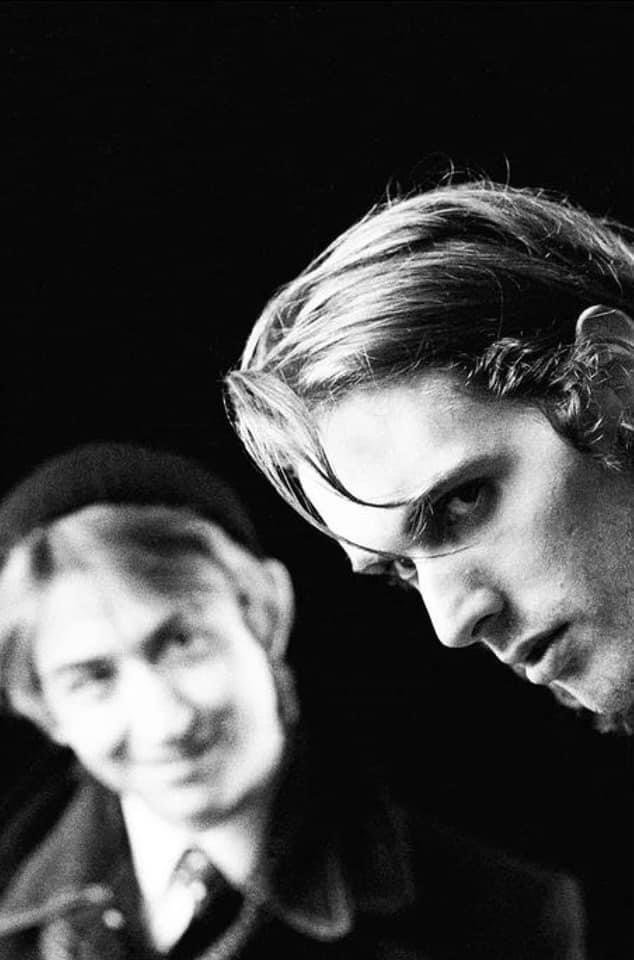
:
TP: I saw those pictures you did of Mark Hollis, I love that picture you did of me and Mark, it’s a wonderful picture. Talking of intense people.
(SR shows said picture)
TP: oh right yeah yeah what a wonderful picture that is. My dear buddy. Yeah what a lovely picture that is. Look at that.
SR: We’ve lost a lot of great people haven’t we.
TP: Mmm. I was very upset about Mark.
SR: I didn’t know that he was so popular but a lot of the people in this Instagram Live now that are listening are huge Mark Hollis fans.
(Shows pics from Such a Shame video).
TP: Oh look at that. Oh bless him. I remember shooting that, this is the Such a Shame video. Oh bless him. Yeah…well, erm, yeah. What can you say?
(SR shows more photos from the video shoot)
Aw, look at him, bless him. He once drove me around the north of England. When he got a little bit of money and he bought a Landrover, he took the top off it, which he wasn’t meant to, and it was January and it was, like, fucking cold. It was like minus whatever, and it had a heater about that size (indicates something very small) and we drove around the north of England. Oh my god. I’ve never been so cold. I can feel it now.
I liked Mark. Mark was always one of the most … I always say this…he was the most down to earth person, maybe you remember this, like,down to earth but the most extreme person. And those albums. I was around for all those albums. He used to joke and say that each album got half the speed of the previous one. Which was quite funny. Those albums are genius tho.
(Explaining the joke:)
I started working with him on It’s My Life, by the time he got to the next album all the songs were running at half speed, coz each album slowed down.
Funny enough, you talked about Stravinsky, earlier on, Mark, like, (he spins the camera to show shelves of DVDs “actually those are my DVDs”) he was the biggest influence on my record collection of anyone, ever, and Stravinsky was one of those people, he used to go “Get fucking Stravinsky, Popey!” So we’d be listening to a lot of Stravinsky, Milhaud…anyway, anyway, he literally shaped my record collection as it is now. Miles Davis and all that stuff. When you hear those albums … (Hollis accent)”Bit of Satie, Popey!”,y’know Eric Satie he was into,all this stuff,so he literally shaped my record collection, my musical taste, you know. Amazing. I mean, amazing.
I remember him, he got this place, he moved out of London and got this little vicarage in the east of England, near Bury St Edmunds,and he had this great big room with a piano in it, and I used to sit there with him,and he used to play these chords, with what he called claw hands or crab hands, I can’t remember what he called it,and he used to just sit there and play these chords as the sun…I can see it now, with the sun going down on the wall… just wonderful times with him.